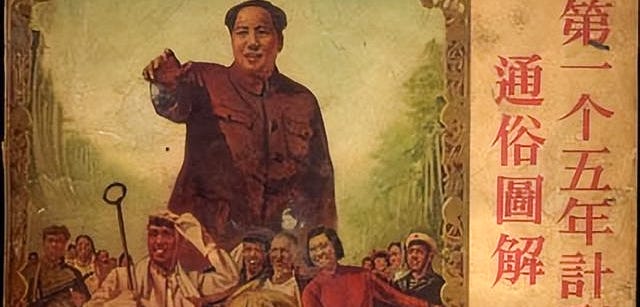
Having reminded readers of the 14th 5-year plan we’re now looking back further to the roots and the rationale behind
National planning has long been central to PRC governance and its policy cycle, yielding both economic policy and political legitimacy. No mere technocratic exercises, plans create protocols through which the Party signals priorities, balances state and market roles, and adapts to shifting domestic and global pressure.
As he announced that the Politburo would review the Party's agenda for the 15th 5-year plan at the October Fourth Plenum, Xi Jinping lauded national 5-year planning as a ‘major governance method’. The market, he noted, 'plays a decisive role' in allocating resources while giving full scope to state direction.
A consistent model is often claimed, despite planning being repeatedly made over. Decades of 'market' reform have resulted in a layered approach, proclaiming policy continuity over leadership cycles.
5-year planning has gone through three eras, argues Wang Changlin 王昌林, Party Secretary of the Academy of Macroeconomic Research
planned economy: 1st to 5th plan (1953–80)
market transition: 6th to 9th plan (1981–2000)
(socialist) market economy: 10th to 13th plan (2001–20)
roots
The planned economy era built a base for industrialising and modernising. With 156 industrial projects supported by Soviet aid, the PRC had complete industrial chains by the end of the 4th plan in 1975.
This period, nonetheless, was eroded by faulty planning. The early command economy, designed to pool resources for socialist transition, was, says Wu Li 武力 National History Society, undermined by three factors: unpredictable yields due to backward technology, poorly managed enterprises with weak incentives, and local government disconnect.
Localities and firms pursued central targets regardless of economic principles or sectoral balance. Sharp imbalances resulted. Growth fell by as much as 30 percent per annum during the second plan, reported by the Central Propaganda Department, averaging only 0.65 percent.
market meets socialism
A turning point came with the 11th Third Plenum (1978), which launched reform and opening. From the 6th plan onwards, the focus shifted to growth, starting with household responsibility system. This move boosted productivity, delivering average annual growth of over 10 percent. Resolving to build a ‘socialist market’, Beijing deepened reform in the 8th plan.
From the 11th period, the PRC term for ‘plan’ shifted from jìhuà, implying top-down administration, to guīhuà, implying guidance. Plans began to stress restructuring, balancing regional growth and innovation: foundations for Xi-era policy priorities.
The model also launched binding and indicative targets
binding targets: for state-led projects, covering the allocation of public resources, major infrastructure, public services and environmental goals. They are enforced internally with strict accountability
indicative targets: guide sectoral growth and structural change, using market incentives to speed progress
state/market duality
The 12th plan expanded on these ideas, addressing deep structural pressures: slowing growth, industrial restructuring, and debt from earlier stimulus. Key initiatives, still active today, include
‘five-sphere integrated plan’: joint development of economics, politics, culture, society and ecological civilisation
comprehensive deepening reform: making markets a decisive factor in resource allocation
regional coordination: Beijing–Tianjin–Hebei integration and the Yangtze River Economic Belt build-up
Swift changes followed in national pricing protocols. Major corruption scandals erupted in the NDRC: some 20 of its serving or former officials were taken away in 2013–14. Beijing urged quick reforms in price setting, claiming supreme authority to direct market decisions.
Following the 2015 State Council decision, official price setting would be limited to major public utilities, natural monopolies, welfare-oriented services, etc. By late 2017, market forces regulated the pricing of some 97 percent of goods and services.
In response to rising wages and overcapacity in conventional industries, the 13th plan took a dual-track approach, merging innovation with supply-side reform. The Party claimed it had achieved its ‘first centenary goal’, a moderately prosperous society in all respects, with absolute poverty eradicated. Xi’s ‘new development concept’, covering innovation, coordination, green growth, openness and sharing, carried over to the 14th plan.
Results under the socialist market economy have generally been positive
11th plan: 20 out of 22 achieved
12th plan: 23 of 24 targets met
13th plan: all 25 met, 13 ahead of schedule
enter the visible hand
Under the 14th plan, zealous rhetoric championing market-driven resource allocation is coupled with stronger Party guidance. Setting its sights on strategic sectors, the plan musters policy packages and institutional reforms to drive innovation, industrial upgrades, and regional coordination. Long-term goals for 2035 appear in the 14th plan, envisioning subsequent annual and 5-year planning. Targets include
leading the world in innovation
completing a modern economy: new-type industrialisation, informatisation, urbanisation and agricultural modernisation
modernising state governance
GDP per capita at the middle-developed country level
seriously narrowing rural-urban gaps in development and living standards
Coordination in finance and scitech is backed by newly created Party Commissions, overriding Ministries’ routine day-to-day signalling of policy preferences. Leveraging ‘patient capital’, the Party selects preferred arenas for investment, channelling funds to develop scitech. Party intervention is the reverse of state retreat: the former lays out policy directives, while the latter regulates, and is regulated, according to the former’s playbook.
master roadmap?
5-year plans have a consistent goal, claim PRC scholars: realising Chinese-style Marxism via modernisation. Wang Xiaopeng 王小鹏 Sichuan University School of Marxism sees sequential planning as a relay, national rejuvenation building stage by stage.
Plan content has, says Huang Qunhui 黄群慧 of the Chinese Academy of Social Sciences, tracked the Party’s ideological line. From revolutionary transition and socialist construction, reform and opening, it carried on in Hu Jintao 胡锦涛’s ‘scientific outlook on development’ and Xi-era ‘new development concept’.
Shifts of direction do not imply inconsistency, argue PRC scholars. They are deemed strategy decisions, helping navigate discrete phases. Plans have sought, since 2012, to realise the Party's centenary goals. E.g. Zhao Fuke 赵付科 Central University of Finance and Economics, notes the 13th plan’s ‘prosperous society’ focus; the 14th clarified the two-step arrangement for the second goal, entailing major targets for 2035.
Certain events have been too problematic to figure into the century-long grand strategy. Despite overall continuity, notes Li Zhongjie 李忠杰 CPC Party History Society, the Party in fact made major mistakes during the second plan, setting and approving unrealistic targets. ‘Seeking truth from facts’ is now cited as essential. Li Zhongjie warns against over-hyping research, local reporting or policy design.
sustainability formula
PRC planning now has almost seven decades of history. Yin Jun 尹俊 of Peking University’s Xi Jinping Thought Research Institute notes that other national planning models collapsed: in Africa by the 1970s, in the USSR in 1991, and in parts of Europe, East Asia and the US under neoliberalism. Yan Yilong 鄢一龙 Tsinghua University blames the failure of the conventional model on overcentralisation, unable to respond to diverse needs or market information.
Three factors are behind the PRC’s formula for success
creative use of market forces: diverging from the Soviet setup, Beijing built a limited, state-led ‘free market’ to supplement the public sector, argues Han Ci 韩慈 Shanghai University of International Business and Economics. PRC planning is not an act of rigid command but a ‘symphony’ involving many actors. Market tools work best in microeconomic areas where bottom-up information is vital
'scientific planning': rests on deep research, rigorous assessment, and broad sectoral input. Before drafting, the NDRC and state agencies research issues in depth, says Li Zhongjie. They would also give expert views once the first draft is in place. Yin highlights dynamic adjustment: mid-term evaluation, annual tweaking by the Central Economic Work Conference and the Two Sessions, and local trials—all keeping plans from becoming ‘zombies’
systemic stability: by combining market signals with expert review—warding off Soviet-style stagnation—the CPC hopes to retain its Leninist framework to sustain policies and deliver results. Yan notes that Party leadership sustains a vision of the present century from 1949 to 2050. Qiushi describes the ‘nationwide system’, where plan targets are broken into sub-goals by level and category, and resources mobilised through central orders. Leading actors learn to act in unison under Party guidance
planning the plan
Via a historical lens, PRC commentators see the 15th 5-year plan as part of PRC socialist planning. It is to be shaped by both domestic goals and global events. The 15th plan should be read in three dimensions notes Cui Youping 崔友平 Central Party History and Literature Institute
primary stage of socialism: part of the journey to the socialist ideal
new era of Chinese-style socialism: Xi’s governance legacy
the new development stage: progress towards the second centenary goal
Long-term visions are then balanced with contemporary concerns, notes Yang Yiyong 杨宜勇 Academy of Macroeconomic Research. Plans must reflect global shifts—protectionism, digitalisation, climate change—and domestic pressures such as ageing, welfare strain and supply-side reform.
policy historians
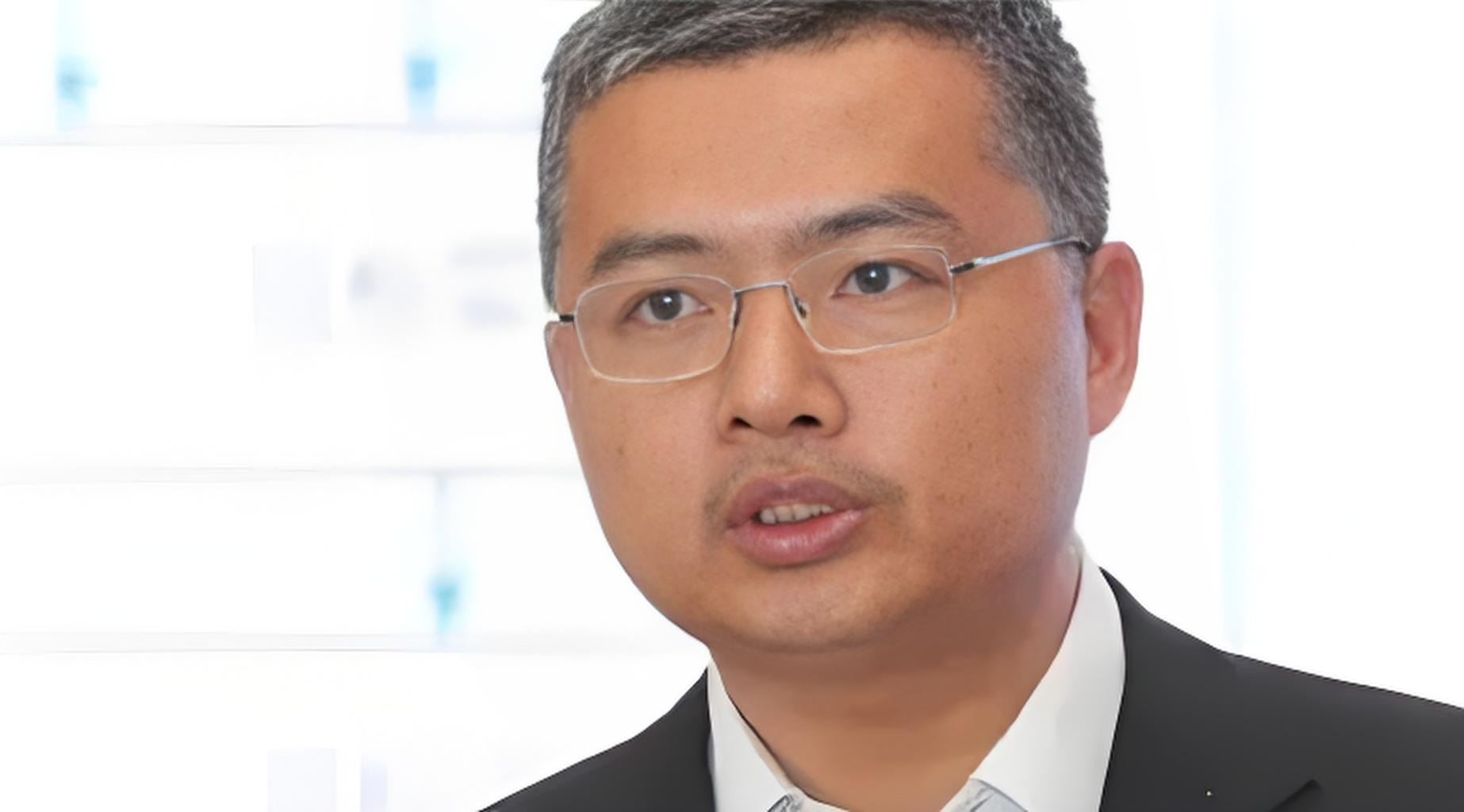
Yan Yilong 鄢一龙 | Tsinghua University Institute for Contemporary China Studies vice president
Beijing upholds a unique development ‘methodology’—a ‘target-based governance’ system—that helps realise strategic objectives in the face of ever-changing domestic and external conditions, argues Yan. He explains that this governance system aligns the goals of different actors, allowing Beijing to mobilise nationwide resources to back policy rollout.
Anchored in the goal of building a modern socialist power by 2049, national planning is structured into 20 stages, each defined by a 5-year plan. The ultimate objective is fixed, but the plans remain flexible, with targets adjusted to shifting domestic and global conditions.
Yan contrasted the PRC’s ‘long-game’ approach with political models lacking coordinated policy frameworks. He argued that Western states, trapped in ‘short-termism,’ struggle to balance public opinion with long-term strategy, producing conflicting goals. The result is mixed policy signals that confuse businesses and erode the sustainability of socioeconomic growth.
A renowned expert in PRC governance and planning, Yan received his doctorate in management at Tsinghua University. He has taken part in national and local planning, leading the 12th and 13th research and evaluation processes under the NDRC. He also researches Party-building and governance.
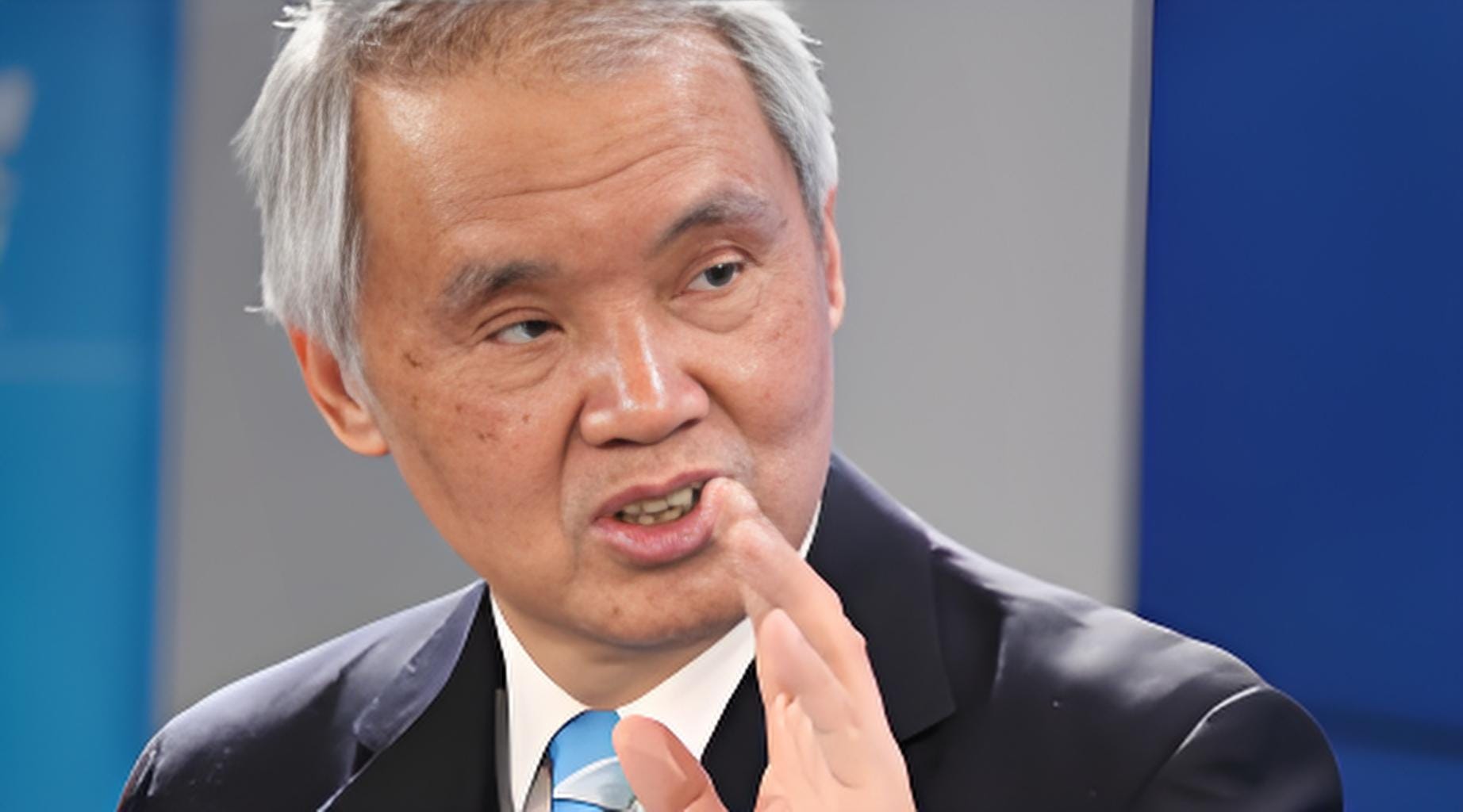
Li Zhongjie 李忠杰 | CPC Party History Society vice chair
The PRC made a pivotal choice in adopting a socialist market system, Li notes, without abandoning its tradition of planning. Beijing drew from the Soviet model but tailored it to PRC conditions and governance philosophy. Since the 6th Plan, rapid reforms shifting from micro- to macro-level governance have revitalised the system, ensuring sustainable statecraft.
The backbone of effective planning lies in rigorous research, careful assessment, and integrating sectoral input. Planners must ‘seek truth from facts,’ grounding plans in precise calculations and realistic evaluations. Exaggeration, Li warns, led to the serious failures of the 2nd Plan.
Contemporary planning rests on legal authority: the State Council deliberates, and the NPC reviews and approves. Plans aim to unleash productive forces to meet the people’s material and cultural needs—early plans targeted subsistence, while later ones focus on raising living standards.
Veteran CPC theorist Li was among the first cohort of Central Party School master’s graduates. Serving as a School Affairs Committee member of his alma mater, Li worked on Deng Xiaoping theory and scientific socialism. From 1991–92, he worked in the Central Research Group on Soviet and Eastern Europe Circumstances and the Central Policy Research Office, tracing and decoding factors behind the collapse of Communist regimes in Eastern Europe.
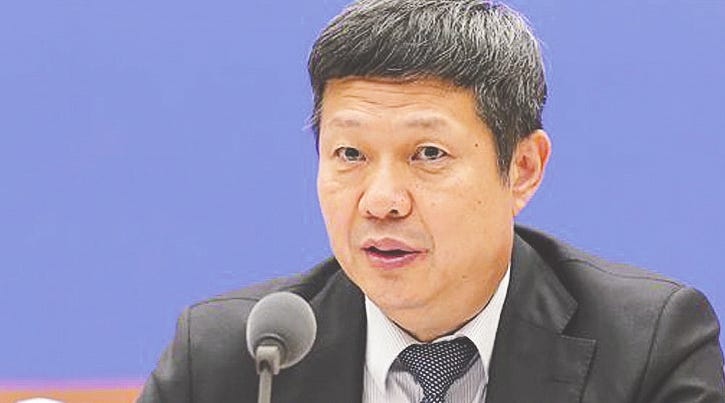
Huang Qunhui 黄群慧 | Chinese Academy of Social Science Institute of Economics researcher
5-year plan mechanisms grew out of the crystallisation of the PRC governance experience, Huang notes. While the state directs major public works, its broader strategies target developmental shortcomings. In this sense, Beijing’s goals are framed as responses to bottom-up challenges.
To enable thorough policy deliberation, the planning functions as a cyclical process of multi-level, multi-actor interaction. Through extensive research commissions and wider participation channels, the Party incorporates expert and public input. In this way, the drafting process becomes a governance tool—balancing central and local interests while easing policy rollout.
Another major function of national planning is to drive institutional innovation. Since 1992, the plans have been used to hammer out Beijing’s vision for a socialist market economy. As a result, 5-year plans become more macro-focused—direct interference reserved for market failure or issues of strategic importance.
Specialising in industry policy, SOE reform and enterprise strategic management, Huang has over 30 years’ research experience. Huang offered consulting services to multiple central agencies—including the State Council and SPP—providing advice on issues including manufacturing capacity build-up, anti-monopoly and 14th 5-year plan development. He chaired the CASS Institute of Economics from 2019–24.