
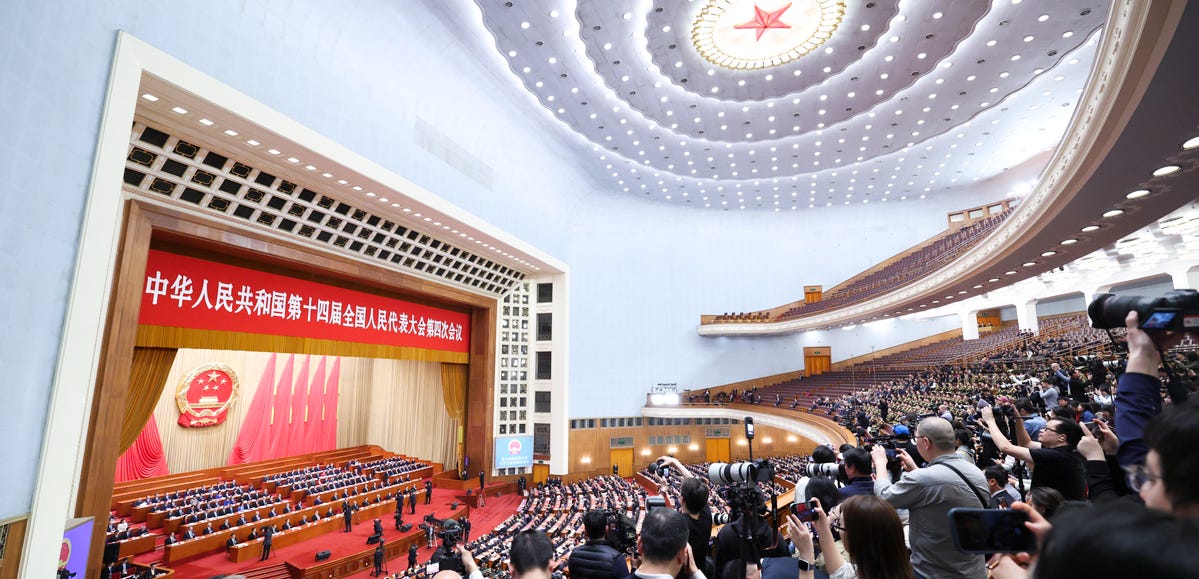
Beijing’s landmark new National Development Planning Law was adopted at the Two Sessions on 12 March. At its core, it’s about centralising power. Discretion once held by local governments and ministries to tweak plans is being pulled back to the centre and bound by law.
The aim is to curb long-standing flaws: plans that shift with staff changes, leadership churn, and vanity projects driven by single ‘boss’ officials. Short-term political gain typically trumps planning. This results in off-book projects and heavy borrowing that can become major sources of hidden local debt. The law seeks to rein this in by locking down how plans are made and changed.
Framing this centralisation with formal institutions, the law’s primary function is to lock down rigid procedures. The mandatory top-down sequence runs: CPC Central Committee advice → State Council drafting → National People’s Congress approval → public rollout.
This binds the lifecycle—drafting, approval, implementation, supervision, and adjustment, eliminating procedural loopholes for local or agency policy capture. Major strategic layout and public policy are strictly subordinated to national development plans.
Across sectors, the law cuts through turf wars. Land-use, transport, industry, and environmental plans drawn up in silos often clashed in the past. A single national plan now sits above all others. Local and sector plans must align with it before they are drawn up. This mplies a shift from a patchwork of plans to a unified frame, with the central plan wielding the greatest legal heft.
from bottom-up trial to top-down control
A shift in governance paradigm is in view. Earlier in the reform era, the central government made top-down plans (e.g. the 5-year format) while urging bottom-up experiments and initiatives. Localities could decide what to test, how and on what scale to test it; Beijing typically approved and formalised outcomes after the fact.
The thrust is now unmistakably more top-down: Beijing dictates the master plan, localities execute it. Scope, boundaries, policy tools, and risk limits of local pilots are strictly predefined. Local experiment is no longer an autonomous innovation: it serves to roll out, refine, and fine-tune top-level design. Monitoring, evaluation, oversight, and accountability are instrumentalised and codified into law. Failure to execute, or arbitrary execution, now carry legal penalties.
holding officials to the long-term
The change is political and touches how officials are assessed. In 2026, Beijing channelled its ‘correct view of political achievement’ into a Party-wide campaign, first targeting leaders at county level and above. This was timed for year one of the 15th 5-year plan, with both drafting and rollout keyed to a ‘correct’ performance lens. Read together, the campaign and the National Development Planning Law serve one aim. The law tightens control over planning power; the campaign reshapes the incentives and conduct of the officials who carry it out.
‘Merit’ is redefined. Officials must (not for the first time) act on facts rather than impulse, follow explicit rules rather than political ambition, create results for the people rather than for personal advancement, and prioritise long-term, durable achievement over short-term, high-visibility gain. Official language invokes ‘for the people,’ ‘through solid work,’ and outcomes that ‘withstand tests of practice’, ‘public opinion’, and ‘history’. Local governance is to exit debt-fuelled visible expansion in favour of disciplined development aligned with macro strategy.
The Planning Law and the campaign on the ‘correct view of political achievement’ are two sides of the same coin. One pulls planning power back to the centre and locks decision-making into a formal legal process; the other tries to rewire how officials think about success—shifting the measure of a good political career away from flashy projects and leverage-driven growth, toward fidelity to central strategy, long-term sustainability, and results that hold up.
building the paradigm
This pivot can be traced back to the Third Plenum of the 18th Central Committee in 2013, when the incoming Xi regime mainstreamed ‘top-level design.’ The trajectory since then has been methodical
2014 pilots for ‘multi-plan integration’
2018 institutional reforms (merging land, urban-rural, and functional zoning plans under the Ministry of Natural Resources)
2019 rollout of the territorial spatial planning system
2021 launch of a ‘law-based’ governance, and ultimately, the promulgation of the Planning Law
It aligns with the all-round shift in the PRC governance paradigm over the past decade. A stronger central hub is required to allocate resources, anchor priorities, and uniformly streamline the execution chain. The rhetoric of a ‘new whole-of-nation system’ 新型举国体制 is its policy expression.
a capstone, not the end
The law marks an institutional milestone, but it arrives with gaps. The mechanisms linking planning to budgeting remain underdeveloped. Procedures for resolving cross-departmental conflicts are still being worked out. Accountability standards for unauthorised adjustments lack the specificity needed to bite. Until implementing regulations and judicial guidance follow, the law remains a framework in search of its operating rules.
planning experts
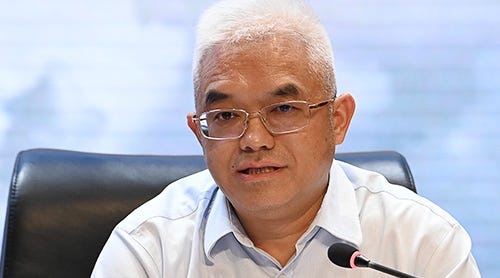
Zhou Guangquan 周光权 | deputy director of the NPC Constitution and Law Committee
A proponent of institutionalised macro-governance, Zhou argues the newly passed National Development Planning Law serves to effectively translate the Party’s propositions into binding state will and unified social action. To counter disjointed regional policies, he notes the legislation sets up a rigid hierarchy that strictly subordinates local and sector-specific plans to the national blueprint. By codifying the drafting, approval, and monitoring processes into statutory mandates, Zhou believes this legal framework will effectively curb arbitrary local deviations and ensure sweeping strategic consistency across all levels of government.
Zhou received his JD from Renmin University of China and was a visiting scholar at Japan’s Meijo University. He has held two consecutive terms as vice chair of the Constitutional and Legal Committee of the 13th and 14th National People’s Congress and has served as dean of Tsinghua University Law School since 2022. Specialising in criminal law, Zhou is currently also the vice president of the Chinese Society of Criminology, invited consultant of the Supreme People’s Court and invited supervisor of the Supreme People’s Procuratorate.
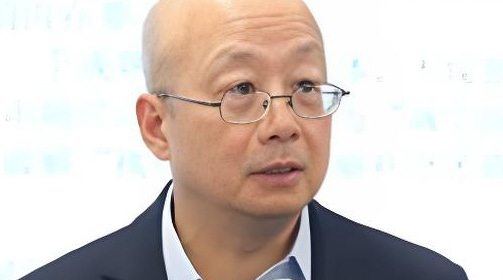
Zhou Li’an 周黎安 | Peking University Guanghua School of Management deputy director
Zhou examines how China’s ‘political tournament system’ has evolved under the imperative of high-quality development. He notes the traditional scramble for economic growth has mutated into a complex, multi-objective contest where environmental and safety failures now act as absolute vetoes. This mounting pressure has caused a stark divergence among cadres: while some emerge as ‘all-around champions,’ others ‘lie flat.’ Warning that such administrative inertia threatens economic momentum, Zhou stresses the need to reconcile multifaceted governance with effective competition. Internationally, he views this top-down bureaucratic rivalry as a uniquely Chinese phenomenon, noting that while foreign central governments might utilise targeted project incentives, the broader hierarchical tournament remains largely unreplicable in democratic systems.
Zhou is an influential applier of the ‘political tournaments’ framework (pioneered by Peking University sociologists), which explains official incentives and their use in central governance. Under tournaments, competition for promotion based on simple numerical criteria may energise official action on high-profile issues, but sideline all other issues. An economics doctorate from Stanford in 2002 preceded Zhou’s teaching career in political economy at Peking University, taking in industrial economy and economic transfer. He has been dean of applied economics since 2011 and deputy director of Guanghua School of Management.
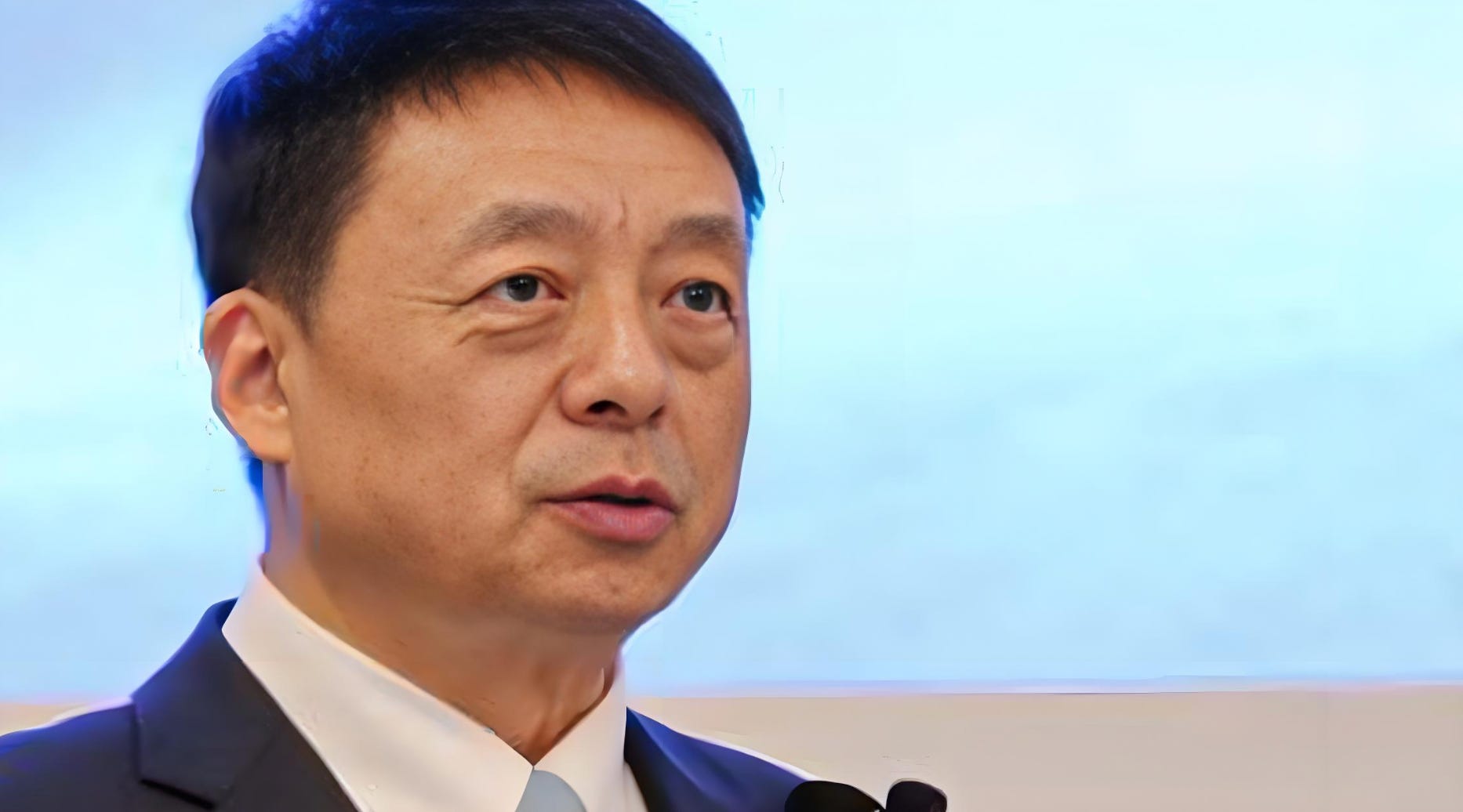
Ma Huaide 马怀德 | President of Renmin University
Reviewing this year’s Government Work Report, Ma highlights its robust focus on building a law-based government. He notes the rhetorical progression from ‘deepening’ this initiative in the 2025 summary to ‘strengthening’ it for the 2026 agenda. For Ma, zeroing in on key operational issues—such as enterprise-related law enforcement and streamlined ‘one-stop’ administrative services—reflects a broader push to enhance both administrative efficacy and social governance. Ultimately, he argues that building law-based governance will serve as an essential safeguard for the successful implementation of the 15th 5-year plan.
Ma was appointed president of Remin University in November 2025. The first administrative law LLD in the reform era, and China Administrative Law Society chair, Ma advises government on corruption and administrative reforms. Advocating restructuring the anti-corruption system, he targets inefficiency and evasion of supervision. Ma has helped draft crucial legislation including Administrative Penalty Law, Administrative Licence Law and State Compensation Law.
context
23 Mar 2026: National Development Planning Law: centralising planning authority and shifting towards rule-based governance
16 Mar 2026: Beijing launched a political campaign on practising a correct view of political performance
8 Jan 2026: Poliburo meeting stresses on the implementation of the new 5-year plan
25 Dec 2025: Politburo sets 2026 anti-corruption agenda to guarantee 15th 5-year plan execution
Such centralisation will leave China, vulnerable. Good for India