
trimming export tax rebates—how is this shifting policy?
cutting subsidies: stop price wars, reduce overcapacity and push high-tech/green upgrade
joining policy levers: link trade, industry, fiscal & investment for resilience & 15th FYP goals
rebalancing toward overseas expansion: shrinking surpluses and boosting the ‘Chinese People Economy’ abroad
January’s export rebate cuts signal tougher moves in tackling overcapacity.
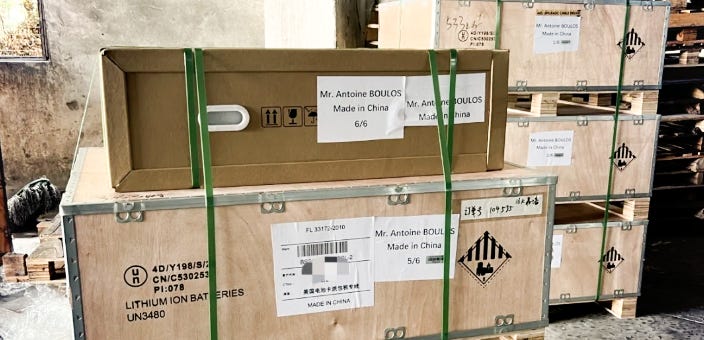
As involution intensifies in glass and lithium batteries, Beijing moved in early January to reduce export rebates on some 250 photovoltaic products. Rebates for 22 battery products will fall from nine to six percent. As Beijing pushes tighter policy coordination, the move carries implications beyond industry—for trade, fiscal policy and overseas investment.
overcapacity and upgrading industries
By trimming export rebates, Beijing is ratcheting up pressure on involutionary price wars that cut profits, aiming to spur industrial upgrading (cutting pollution and carbon emissions)—a Ministry of Finance spokesperson said. Urgency is rising: nearly 30 percent of PRC industrial firms are losing money, capacity use has dipped below average, and producer prices stayed deflationary.
The policy marks another step after Beijing’s 2025 campaign to address overcapacity and ‘involution’, including consultations with top firms and curbs on output and expansion. It also builds on a 2024 cut in rebates for speciality and ordinary glass from 13 to nine percent. This time, specialty glass rebates are entirely scrapped.
Reducing the rebate is set to steer the battery industry away from pure scale expansion and price cuts, urging firms to raise product tech content and value-added to absorb cost pressures, explained Yu Shuo, 余烁, of Chuangyuan Futures. This will guide industry toward healthier, more sustainable paths, Yu added.
While Beijing is scaling back support from low-value manufacturing, such as basic glass processing, to free resources for more value-added uses, it remains alert to the security and social risks of deindustrialisation. Xi Jinping underscored this in a January 2026 speech, calling for ‘a reasonable weighting in manufacturing’.
The goal is upgrading and replacing, not wiping out, traditional industries. A case in point: rebates for ordinary float glass (HS code 7005, used in construction and cars) stay untouched at nine percent from late 2024. Beijing still seeks to cushion the construction supply chain while pushing ‘high-tech’ and ‘green’ sectors to become more self-sufficient.
joining policy levers
This shift also fits within a broader effort to align policy across sectors amid changing domestic and global conditions. The 15th 5‑year plan, the country’s blueprint for the coming five years, warns of ‘external risks’ and ‘changes unseen in a century’. These range from a record US$1.2 trillion trade gap in 2025 (up 20 percent over 2024) to worsening trade disputes with the West and deflation weighing on prices.
Glass and lithium batteries—export engines facing supply glut and external pushback—illustrate some of these pressures Beijing aims to address. To meet these challenges, the plan calls for greater resilience across tech, industry and the broader economy.
Beijing has outlined clear steps to realise this vision by tightening links between trade, industrial, fiscal and investment policies. First proposed in 2023 by Liu Yuanchun 刘元春, the country’s top economic adviser, and backed by Jiang Xiaojuan 江小涓 in 2024, a leading trade and industry scholar affiliated with MofCOM.
The idea now anchors major policy frameworks, including the Third Plenum, the Central Economic Work Conference and the 15 5-year plan. Beijing’s recent change to export tax rebates extends this ‘coordinated’ approach, leveraging and coordinating sectoral policy for broader national goals.
trade, fiscal and overseas investment
By cutting export tax rebates, an indirect subsidy, Beijing aims to ease trade imbalances and let glass exports find their market level. The step supports its renewed 15th 5-year plan goal of ‘balancing exports and imports’. It also comes as the PRC’s trade surplus hits record highs and the glass sector wrestles with overcapacity and weak prices.
Photovoltaic glass exports rose 26 percent year on year in Jan–Nov 2025, while major producers planned 30 percent output cuts in July 2025 to stem oversupply. The China Photovoltaic Industry Association welcomed the change, saying it should cut the PRC’s exposure to trade frictions and lower the risk of countervailing and anti‑dumping claims.
Scrapping rebates could also bolster the budget and ease fiscal strain. Official data show export tax rebates cost nearly C¥2 tn in the first 11 months of 2025. The move could free funds for 15th 5-year plan goals such as lifting consumption, raising public services spending, supporting farming and advancing high‑end industry and research in areas like semiconductors and AI.
It also fits Beijing’s goal of expanding overseas investment—leveraging comparative advantages, commanding more resources, mitigating geoeconomic tariffs and capturing new markets. Citing the 15th 5-year plan call to ‘guide industrial chains to venture abroad reasonably’, Jiang Xiaojuan says Beijing now places more weight on the ‘Chinese People’s Economy’, which counts offshore output as national income.
She expects it to play a larger role in growth and urges PRC firms to expand beyond China’s borders. From 2020–25, PRC ODI jumped 31 percent. Lending PRC credit abroad also helps draw down excess savings and narrow the global trade gap–another national aim.
PV commentators
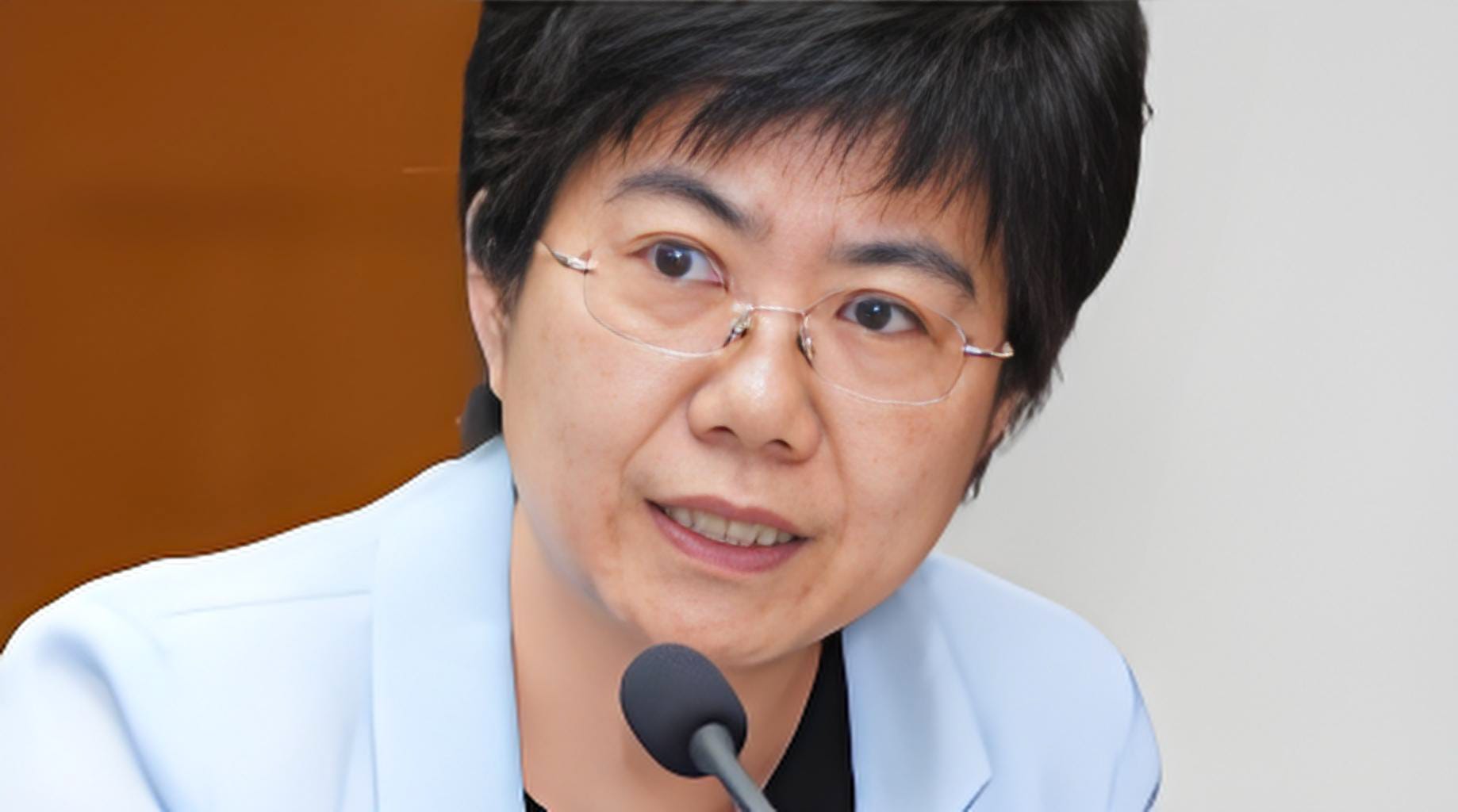
Zhang Xiuqing 张秀青 | China Centre for International Economic Exchanges Regional and Industrial Economics Research Department director
Phasing out export tax rebates on photovoltaic products and batteries shows that these industries are strong enough to compete on their own and are now leading global markets, says Zhang, noting that this signals a shift from chasing scale to improving quality and efficiency.
Cutting rebates will raise firms’ export costs and squeeze profits in the short term, but over time, this will spur industrial upgrading and force weaker firms to exit the market, said Zhang. Firms now face pressure to cut costs, hone processes, build brands and open overseas sales channels, she added.
A PhD in management from Renmin University, Zhang serves as a senior economist at CCIEE. She previously worked at the Dalian Commodity Exchange Research Centre. She has led over 30 projects with key government agencies, including the Central Financial and Economic Affairs Commission, NDRC, MARA and CSRC. Her research focuses on FDI, industrial upgrading and agricultural risk management.

CPIA | China Photovoltaic Industry Association
The CPIA says photovoltaic exports now face fierce price competition abroad, with export volumes up but prices down. Some firms sell at deep discounts, even using export tax rebates as price leeway, transferring fiscal funds meant to offset domestic VAT to overseas buyers. This effectively turns the rebates into subsidies for foreign markets and cuts domestic profits. At this stage, lowering or scrapping export tax rebates could help overseas prices return to reasonable levels. While not a full remedy for excessive competition, such steps may curb the long-term rapid slide in export prices.