
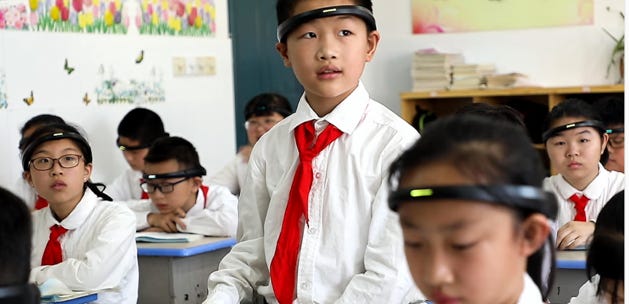
Urgently updating a new generation on AI, Beijing is rolling out AI courses for K–12 students and teachers
Education policy is embracing artificial intelligence (AI). Not a new watchword, ’invigorate the country through science and technology’ is getting a serious AI inflection. A major spotlight at the March 2025 Two Sessions, Huai Jinpeng 怀进鹏 Minister of Education called for raising skills in ‘emerging and interdisciplinary’ fields.
setting AI homework
This year, an AI education white paper is in the works; the sector is showered with policy suggestions. An Opinion on digital education in early April urged pursuing new tech trends, not least AI, at all levels. Credited with ‘transformative’ power, this entails
speeding up building LLMs for education
piloting AI applications
exploring ‘AI+education’ scenarios
creating AI courses
building ‘AI+X’ pilot centres nationally
drafting guidelines for teachers and students
setting assessment protocols for AI and big data training
Guidelines for general AI education and the use of generative AI in primary and secondary schools were issued in May. Curriculum design is divided by school levels
primary: cultivating children’s imagination and improving basic cognition
junior high: technical principles and basic applications
senior high: systematic thinking and innovative practice
Tech dependence, warns the Guidelines, is to be eschewed. Directed away from copy-pasting AI-generated content for homework and exams, students are limited to using it in creative tasks, and teachers are to advance critical thinking. The aim is to cultivate students’ critical thinking and ability to detect AI-generated content.
Raising teachers’ digital literacy in the AI age matters, insisted Wu Yan 吴岩 an MoE (Ministry of Education) vice minister at the 2024 WAIC (World AI Conference). Digital empowerment for teacher development featured in an MoE notice in July 2025; AI literacy changed from ‘nice to have’ to ‘must have’ for K-12 teachers, principals and Party secretaries.
This extends to enhancing tech infrastructure, building AI training platforms for domestic and foreign teachers (from neighbouring, BRI, and African states), selecting example cases, expanding AI usages in classrooms, delivering digital high-quality resources to rural areas, and more.
PRC teacher/student ratios lag those of developed countries. Population decline creates a surplus of kindergarten teachers, while primary school enrolment creates teacher shortages. Existing criteria work against kindergarten teachers from moving up to teach primary school, warns Wu Zhihui 邬志辉, a Northeast Normal University vice president. Teachers’ colleges should provide training in cross-grade and discipline pedagogy, suggests Wu, using AI to help teachers adapt to complex workloads.
from global to local
The push for AI education can only strengthen. An ‘open, inclusive and mutually beneficial global intelligent education ecosystem’ was urged by Huai Jinpeng and Ding Xuexiang 丁薛祥, a State Council vice premier, at the ’2025 World Digital Education Conference’. This entails building an ‘AI value system’, sharing progress, and safeguarding AI ethics and security.
During Xi’s diplomatic visits in the spring, ‘explore cooperation in AI’ was featured in the joint statements with Vietnam and Malaysia.
To align upskilling with demand, ’AI empowerment’ was among prioritised areas in MoE’s 2025 adjusted catalogue of undergraduate majors, qualified for fast track approvals: importantly, AI education, intelligent audiovisual engineering, and digital drama.
Skills upgrade channels for the AI era are forming in Beijing and Shanghai
Shanghai Jiaotong University issued an AI-empowered education plan
Beijing’s Education Commission set up a Youth AI Academy in Haidian
the latter body will promote AI education in primary and secondary schools, building a ‘campus + enterprise + middle school’ joint upgrade scheme for top AI talent
regions like Xi’an (Shaanxi), Tianjin, and Guangxi have an AI education policy of their own
Not strategic for education alone, AI is a critical factor in the Xi-era goal of ‘high-quality development’ (HQD). Higher ed institutions are on notice to offer majors aligned more closely with industry needs—more STEM talent for PRC high-tech development.
schools in action
Feeding LLMs with royal jelly (private, institution‑specific data) has become the baseline in PRC higher education. Their algorithms draw on admissions records, training plans and job outcomes, grounding career advice. Instead of training new models from scratch—a process costly in compute—this approach lets students economically tailor their courses for the current job market. Ever more aspects of campus life are impacted.
a Shandong vocational school uploads its enrolment, training, admission and job data to a DeepSeek‑based adviser, streamlining parents’ and students’ queries
’AI judges’ built by Dalian University of Technology students yield more rigorous and transparent exam evaluation, focusing on growth
Northwest A&F University deploys ’AI counsellors’, meeting a tight job market with a live job pool, and tools to fix résumés and rehearse interviews
Public projects with more funding and broader aims than simple Q&A tend to train new models and lure private firms.
’Shicheng Wanxiang,’ a foundation model built for basic education by Beijing Normal University and TAL Education, is a case in point. It measures student ability against the latest curriculum standards and can draft lesson plans for teachers. Listed on Beijing’s AI app store, the model is being trialled in 60+ schools in Haidian, Dongcheng, and other districts. Pilots have been run in primary and secondary schools since April 2024, seeding benchmark use cases. The model is meant to carry out the city’s work plan for AI applications in education, 2024–27.
TAL made AI learning machines its next key revenue stream after the double reduction policy hit its tuition. It has launched two to three AI learning machines annually since 2023. These sold some 190,000 units on major platforms March–May 2025, up 70 percent y-o-y. Revenue growth came from regular tuition services and AI-driven hardware, says Peng Zhuangzhuang 彭壮壮 TAL Education president and CFO.
New Oriental likewise advances OMO (online merge offline) teaching, investing in AI across their network, launching next-generation AI learning devices, states Zhou Chenggang 周成刚 New Oriental CEO.
VisionSquare Education Technology launched ‘Zhiji’ (知己 – know yourself) AI education model, providing personalised assistance in undergrad choice of majors, career guidance, and offshore study for students entering higher education.
An Educational Large Model Development Working Group, initiated by Wang Dianjun 王殿军 National Education Supervisor, took shape at an education large models talent summit in June. Only by gathering forces from government, industry, academia and research, argues Wang, can educational large models leap from ‘usable’ to ‘excellent’.
blindly following AI harms learning
Over‑reliance on AI dulls students’ drive and inquiry, and educators fear that taking answers at face value weakens sceptical and creative thought.
Cheating aside, AI may strip students of choice by replacing exploration with fabricated solutions, notes Chu Zhaohui 储朝晖 National Institute of Educational Sciences. Teachers may stagnate, reduced to voices for large models. AI recalcitrants will be left behind; yet teachers are irreplaceable, insists Tan Tieniu 谭铁牛 CAS academician, for students’ whole‑person growth.
Before the advent of DeepSeek, Meta’s open‑source Llama dominated PRC education AI; Western‑centric bias was a concern. Offshore web content and unchecked synthetic data from large models can tilt outputs to US/EU norms, warns Miao Fengchun 苗逢春 Beijing Normal University, narrowing views and stifling knowledge‑building.
Overspending on AI is rife, with many institutions reinventing tools and features that are already current. Money is wasted. A shared roadmap, common standards, and top‑level design are needed to link resources, Tan Tieniu says.
rethinking education
The AI revolution mandates rethinking education priorities, urges Zheng Yongnian 郑永年 Chinese University of Hong Kong (Shenzhen) School of Public Policy. It should, he argues, focus more on human creativity and imagination rather than mere knowledge transfer.
Critical thinking is essential to grasping and mastering AI, avoiding blind dependence that risks creating an ‘artificially disabled’ generation, explains Dong Yu 董毓 Huazhong University of Science and Technology Innovation Education and Critical Thinking Research Centre. Rife with fabrication and bias, AI responses require critical thinking.
Ten AI firms led by CANGE (Chinese Association for Non-Government Education) released the first ‘AI+Education’ industry agreement on 4 August. It urges educational intelligent agents to develop their core concepts with ‘moral education and intelligent benevolence’. Industry development must promote students’ cognition and innovation via interdisciplinary integration and avoid repetitive drilling.
While developing frameworks to regulate educational AI, experts urge students to embrace AI. We’re worried, not about using AI too much; rather, they fail to use it enough to keep pace with the times. We want everyone to use it, but safely and ‘compliantly’, notes Ren Jie 任捷 a Guohao College vice dean. Urging youth to spend at least four hours daily using AI, Shen Yang 沈阳 Tsinghua University’s School of Journalism and School of AI sees AI evolving from tools to social infrastructure by 2035.
ed AI experts
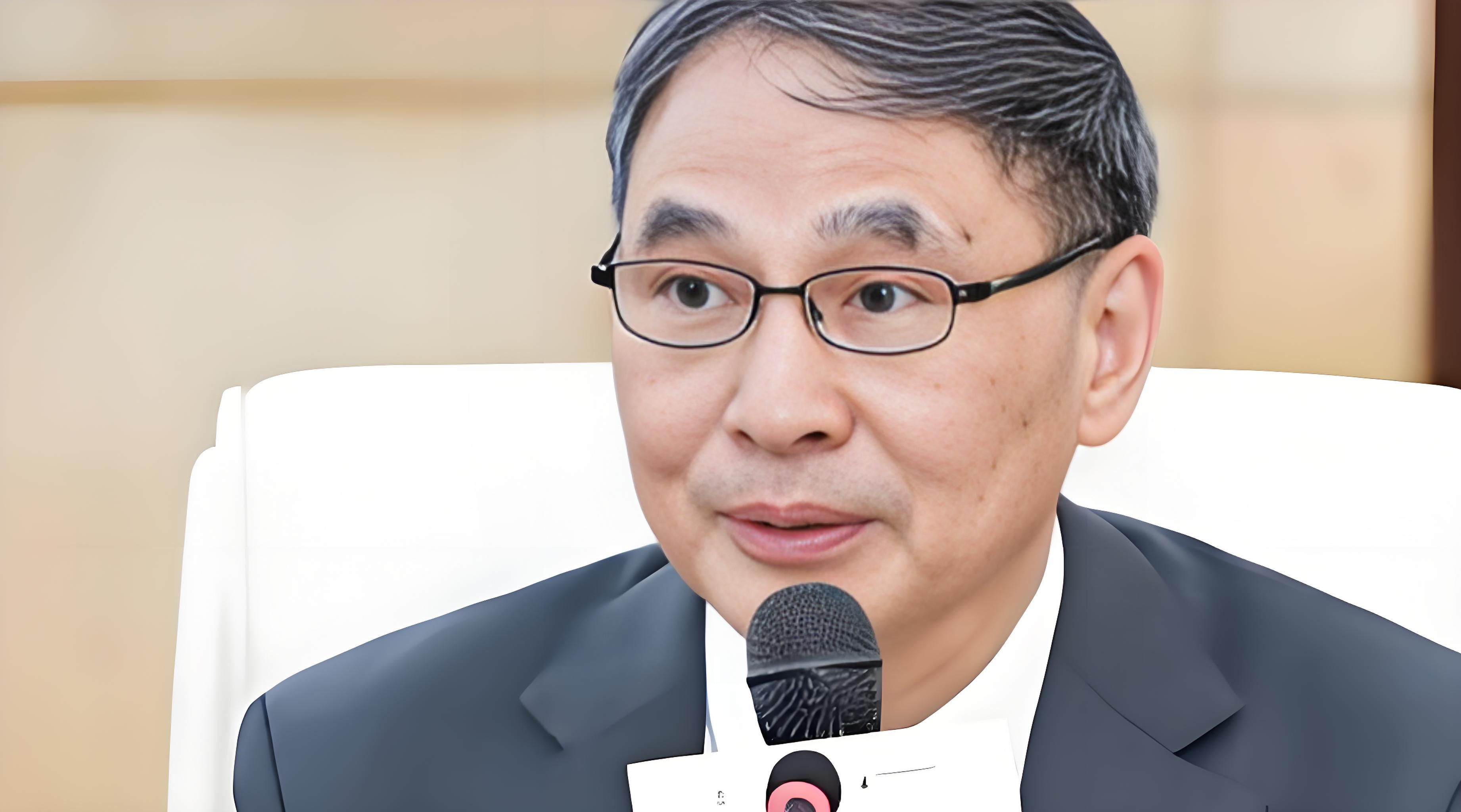
Zheng Yongnian 郑永年 | Chinese University of Hong Kong (Shenzhen) School of Public Policy dean
Beijing’s transition to high-income status hinges on tech progress and coordinated talent development. Yet education and innovation remain fragmented: the MoE manages schooling, the MoHRSS vocational training, and immigration authorities’ overseas recruitment. A unified ‘big innovation system’ is needed to integrate them.
Since innovation peaks between ages 20 and 40, education should enable earlier workforce entry, with AI handling knowledge transfer and curricula emphasising creativity. Universities ought to shorten programs, direct resources toward young innovators, and replace the ‘hat’ system of honorary titles with market-based evaluations, keeping scholars focused on real innovation and boosting national capacity.
A renowned PRC political economist and international affairs generalist, Zheng is an authority in PRC politics, foreign policy, East Asian security and globalisation. Taking a PhD in political science from Princeton University, Zheng has directed the National University of Singapore’s East Asia Institute.
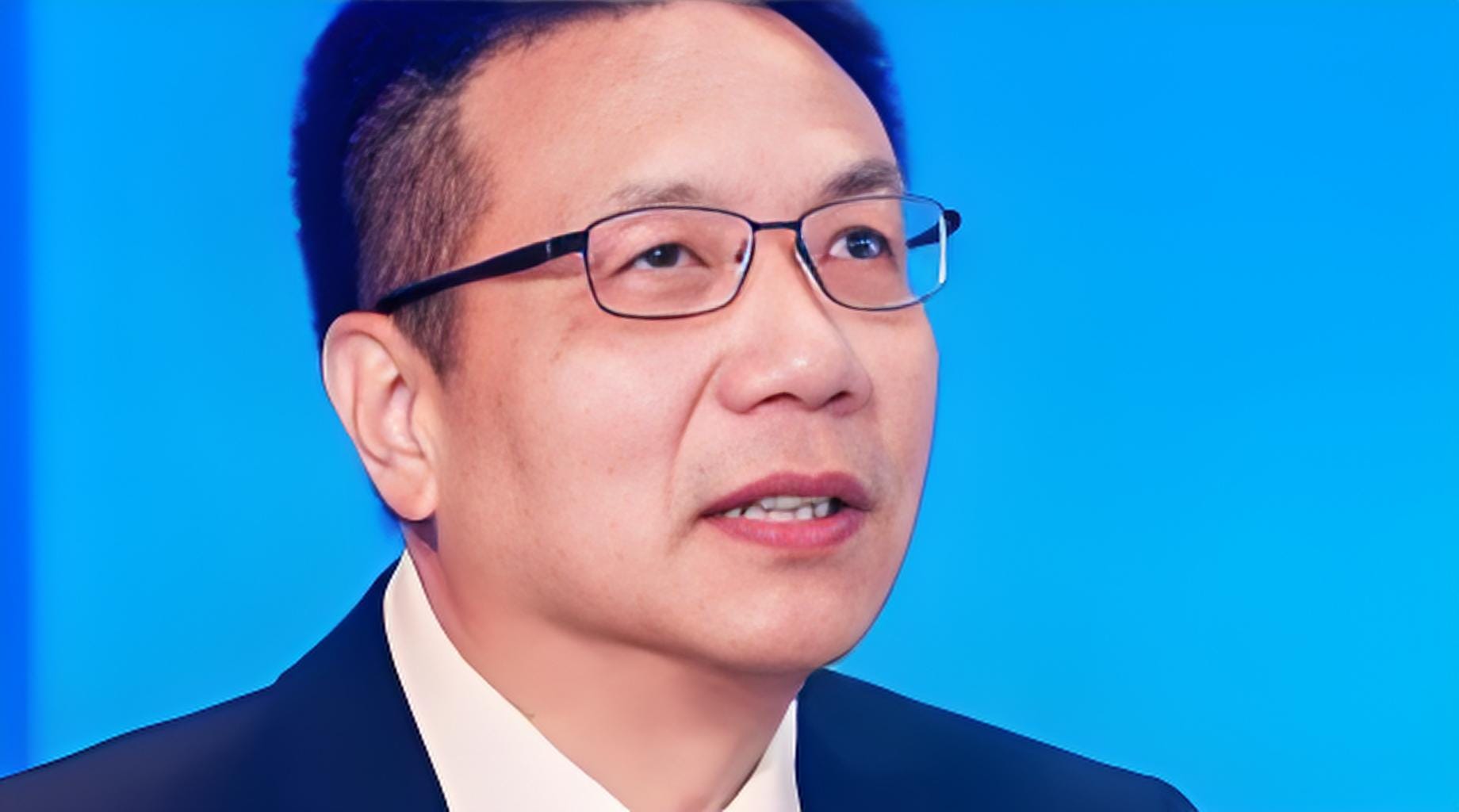
Xu Fei 徐飞 | Fuyao University of Science and Technology executive vice president
As Artificial General Intelligence (AGI) accelerates data-driven knowledge creation, up to 60 percent of students’ professional knowledge may be obsolete by graduation. Education must move beyond standardised teaching toward problem-solving, human–machine collaboration, and uniquely human skills such as intuition and critical thinking. Student development should shift from narrow I-shaped expertise to π-shaped versatility, combining multiple specialised strengths.
Xu outlines six pathways for transformation: reconstructing liberal arts around fundamental questions; building trinity systems linking education, technology, and talent; redefining philosophy to stress meta-abilities; advancing human–machine collaborative learning; fostering non-coding skills; and reshaping research paradigms through AI-enhanced discovery.
Dr Xu Fei is the Executive Vice President of Fuyao University of Science and Technology (FYUST) and Dean of its Digital Economy and Management School. An experienced academic leader with a PhD in Management Engineering from Southwest Jiaotong University, he previously served as president of the University and held roles at Shanghai Jiaotong University. His expertise spans strategic management and innovation.
Zhou Dawang 周大旺 | Ministry of Education’s Science Technology and Informatisation Department director
The PRC national smart education platform is expanding in all directions. It will encompass ideology, politics, physical education, aesthetics, labour education, special needs instruction, and language studies, extending into family, social, elderly, and vocational education sectors.
The AI-empowered education initiative progresses through four strategic pillars
learning AI via wide-ranging literacy curricula spanning popularisation to frontier interdisciplinary studies
using AI through integrated intelligent lesson preparation, human-machine classroom collaboration, and learning analytics
creating AI by developing domestically-controlled educational language models and open-source ecosystems
protecting AI through robust technical, content, and ethical security frameworks with human-centred evaluation systems
Zhou announced plans for education-specific large language models built on domestic general-purpose foundations. The initiative will create an AI innovation open-source community, integrate multimodal data from textbooks and assessments, and set evaluation benchmarks. It will run incentive-based developer programs to promote technology sharing and collaborative progress in educational AI.
Zhou Dawang is Director of Science and Technology & Informatisation at the Ministry of Education, appointed in April 2023. He took a PhD in Microbiology and Immunology from Yeshiva University (USA) and was a postdoc at Harvard Medical School. Formerly a Vice President of Xiamen University, his pioneering research focuses on the hippo signalling pathway in liver cancer and ‘liquid gating technology’. An award-winning scientist, he now leads national digital education reform and innovation strategies.